

Introducing children to coding through hands-on play is one of the most effective ways to build their problem-solving skills, creativity, and logical thinking from an early age. Coding toys for kids can transform complex ideas into playful, interactive experiences that feel more like games than lessons.
These recommendations are based on age-appropriate learning principles commonly applied in early STEM education, focusing on how children develop sequencing, logic, and problem-solving skills at different stages. Many studies have shown that such toys are effective in teaching foundational STEM concepts while supporting healthy cognitive development
Many of the coding toys listed here are widely used in classrooms and structured STEM programmes, and are highly recommended by both parents and educators as effective tools for early coding learning.
Coding toys are hands-on learning tools designed to introduce children to computational thinking and programming fundamentals. They come in many forms—robots, building kits, digital games, and even board games. Instead of typing code, children often use colour-coded blocks, cards, apps, or physical buttons to solve challenges or give commands. These toys simplify abstract coding concepts so kids can learn through experimentation and play.
These coding toys are important because they nurture critical thinking, creativity, and persistence. They also help children understand technology in a tangible way, preparing them for a digital future. By starting early, kids gain confidence in solving problems and tackling challenges independently. Coding toys can also complement school learning and provide a foundation for more advanced programming skills later in life.
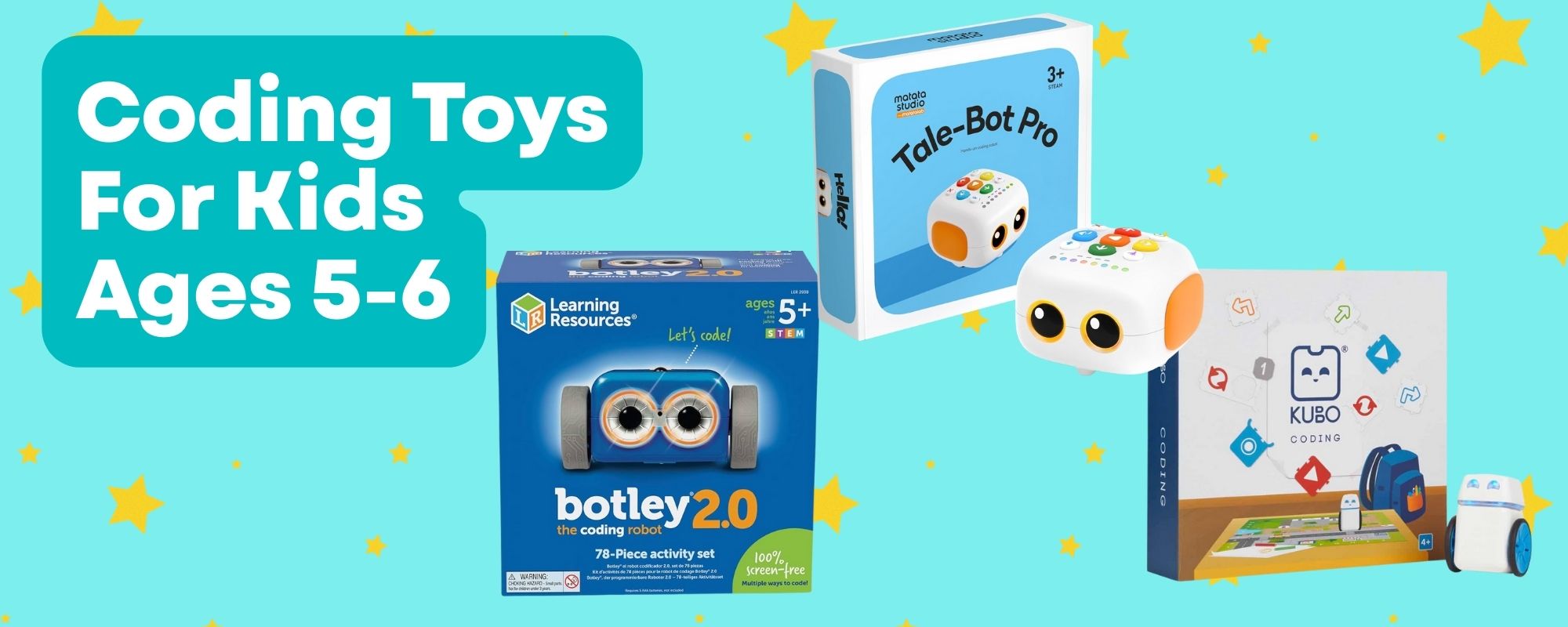
At this age, children learn best through tactile play, simple storytelling, and cause-and-effect activities. Coding toys for younger learners should emphasise sequencing, pattern recognition, and basic logic rather than complex coding languages.
The Code-A-Pillar uses detachable segments that children connect in different sequences to make the caterpillar move in various directions. Each segment represents a command, teaching the basics of sequencing and planning.
This toy is great for young kids because it encourages trial and error, improves motor skills, and builds confidence through visible results.
Tale-Bot is a screen-free coding robot that children program using buttons and command cards. It combines storytelling with movement, allowing kids to record audio, navigate paths, and solve simple challenges.
Tale-Bot is ideal for kids aged 5–6 because it blends creativity with early coding concepts like sequencing and logic, helping children understand cause-and-effect through imaginative, hands-on play.
KUBO is a friendly, screen-free robot that children program using physical coding tiles (TagTiles) placed in sequences on the floor. By arranging these tiles, kids learn sequencing, loops, and basic functions in a tactile and intuitive way.
KUBO supports early STEM learning while building problem-solving and spatial reasoning skills. It’s great for collaborative play and classroom use, encouraging teamwork, communication, and exploration through play-based learning.
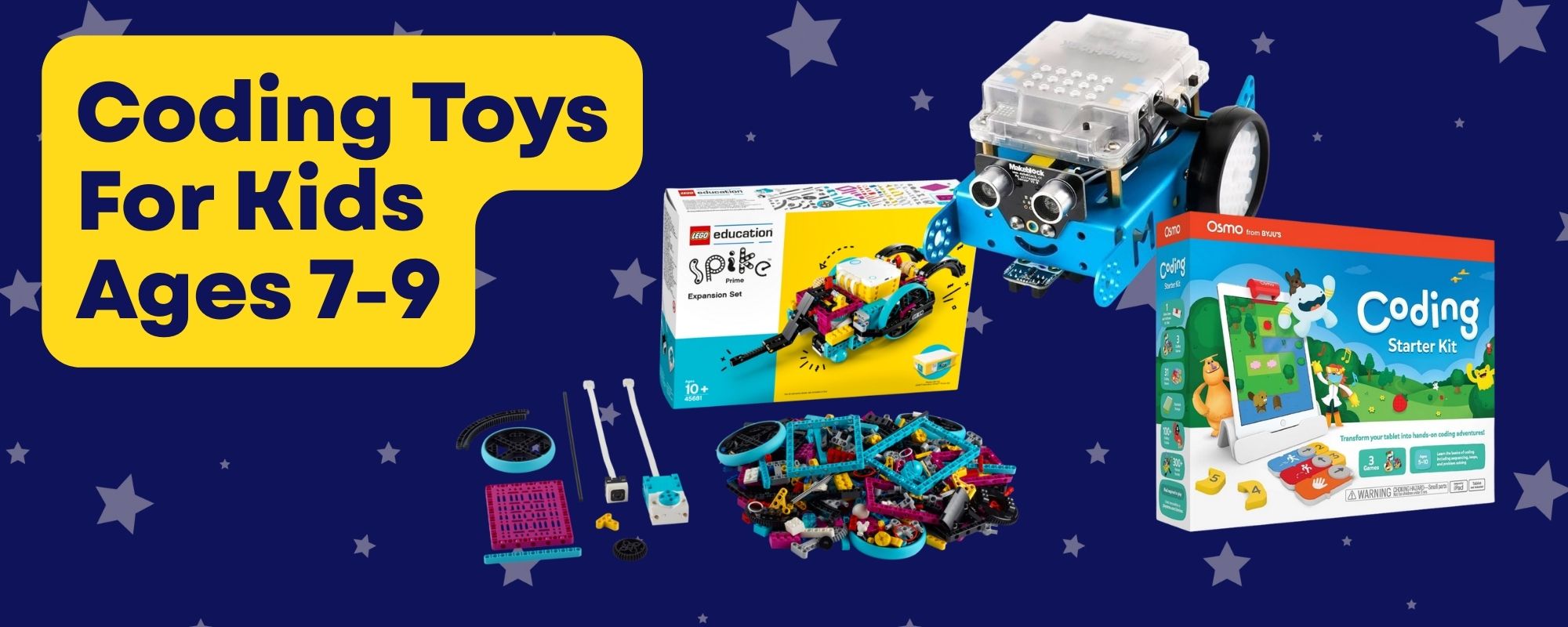
As kids grow, their ability to tackle more structured challenges improves. Toys in this age range often introduce basic programming languages, robotics, and problem-solving tasks that require deeper thinking.
LEGO® Spike Prime is a versatile robotics kit that allows kids to build automated machines and program them using a block-based interface. It introduces engineering, sensors, motors, and creative problem-solving through hands-on challenges. Spike Prime is excellent for this age group because it blends construction and coding while teaching real STEM skills in a fun and accessible way.
The mBot is a beginner-friendly robot that uses Scratch-based programming. Kids can build the robot themselves and then program it to navigate mazes, play games, or solve challenges. This toy helps children understand robotics, sensors, and engineering. It also encourages experimentation and iteration, key coding principles.
For programmers looking for inspiration for their next project, makeblock has a blog full of articles and guides to check out.
Osmo integrates physical coding tiles with a tablet app, allowing kids to control on-screen characters through hands-on coding blocks. It teaches loops, logic, and sequencing through playful quests. The Osmo system is excellent for kids who learn visually and kinesthetically. It balances digital and physical play, making abstract concepts easier to grasp.
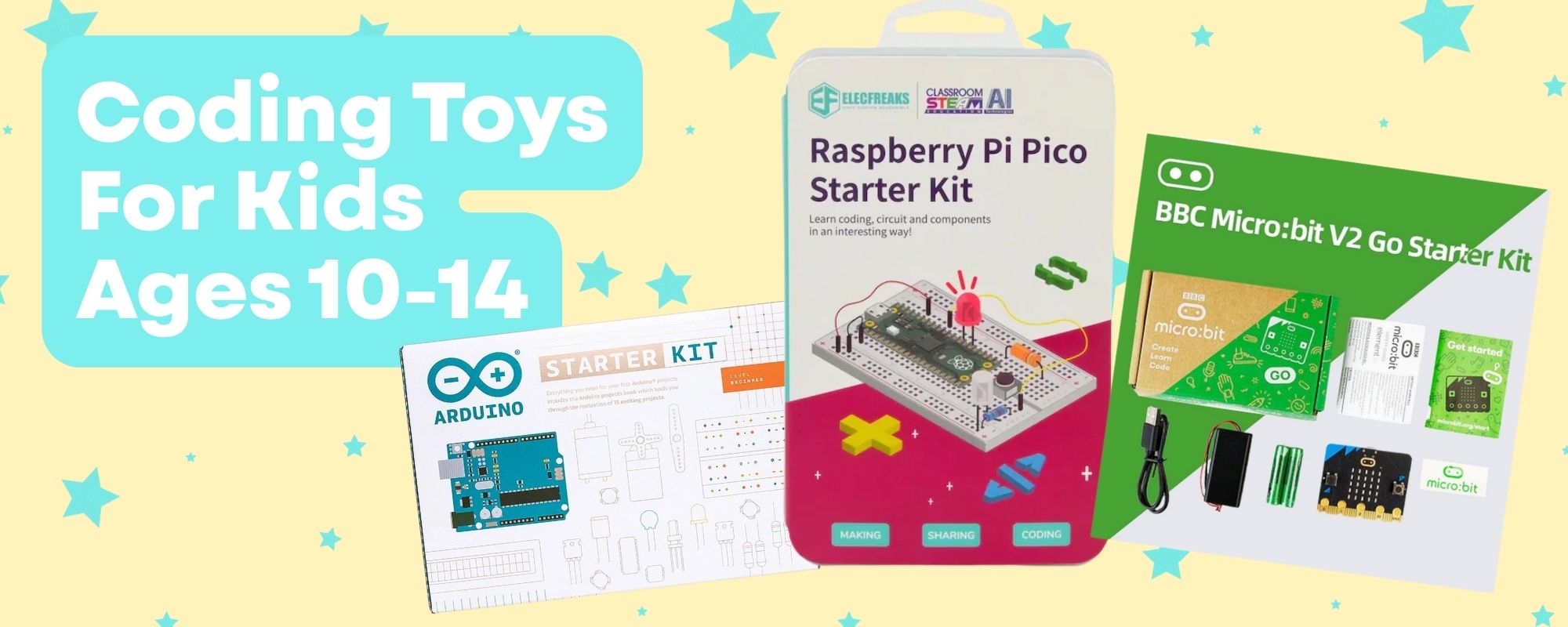
Older kids are ready for more complex projects involving robotics, engineering, or real programming languages. Toys for this age group should challenge their creativity and critical thinking while still being enjoyable.
Raspberry Pi kits introduce children to real computing. Kids can build small gadgets, program simple games, or learn Python through guided tutorials.
This kit is excellent for older learners because it provides hands-on experience with real-world coding concepts. It also encourages long-term learning and exploration.
Arduino is a hands-on electronics and coding platform that lets kids build and program simple projects using sensors, lights, motors, and boards. With beginner-friendly kits and block-based or text-based coding, children can create interactive projects like blinking LEDs, simple robots, or alarms.
Arduino strengthens understanding of logic, basic electronics, and problem-solving while encouraging creativity and experimentation. Its flexibility and real-world applications make it especially valuable for learners who enjoy building and exploring how technology works.
The micro:bit is a small, programmable device that combines coding with built-in hardware like LEDs, buttons, sensors, and inputs/outputs. Kids can use block-based coding or simple text coding to create interactive projects such as games, digital badges, alarms, and simple controllers.
micro:bit encourages exploration in both coding and electronics, helping students understand how software controls hardware. It builds foundational STEM skills while promoting creativity, experimentation, and problem-solving.
Coding toys for kids play a vital role in making programming fun, hands-on, and accessible for all ages. When selected based on age-appropriate STEM learning principles, these toys can effectively support children’s cognitive development and early problem-solving skills.
To complement the learning value from these toys, parents can also consider early STEM programmes designed for children, which are more hands-on and can further enhance learning. Centres such as The Lab Singapore provide such enriching coding programmes that complement what kids learn through these toys, allowing them to further develop their coding skills while enjoying a more engaging learning experience. Find out more about here: https://www.thelab.sg/classes-we-offer/
Coding toys for kids provide hands-on, screen-balanced learning that helps children understand logic and sequencing more naturally, especially for younger age groups.
Children can begin as early as age 4 or 5 with toys designed for beginners. As they grow, they can progress to more advanced kits that teach real coding concepts.
Coding toys build problem-solving skills, creativity, and resilience. They also introduce essential STEM concepts in a playful way, preparing kids for future digital learning.