FAQ
A resource providing clear answers about our coding, AI, and robotics curriculum and courses.
This resource is designed to provide parents and learners with comprehensive insights into The Lab’s curriculum, courses, and approach to Coding, AI, and Robotics education.
From foundational coding concepts to advanced AI and Robotics projects, we explain how our programs nurture creativity, problem-solving, and computational thinking in children. Learn how our hands-on, project-based learning and MOE-certified, IMDA-approved teachers help students build real-world skills and prepare for future opportunities in technology.
Curriculum in Coding, Robotics and AI
Why should my child learn Coding, Robotics and AI?
Learning Coding, Robotics, and AI equips children with critical problem-solving, creativity, and future-ready skills. Through hands-on projects and competitions, they build confidence, resilience, and teamwork while gaining real-world experience in technology, preparing them to thrive in a rapidly evolving digital world.
Why Coding Remains Important in the Age of AI?
Even with AI becoming increasingly powerful, coding is still a fundamental skill that teaches children how to think logically, solve problems, and break complex tasks into manageable steps. Learning to code isn’t just about writing programs—it’s about understanding how technology works, making informed decisions, and creating tools rather than just using them.
By learning coding, children gain the ability to control and customize AI, design innovative solutions, and adapt to new technologies—skills that AI alone cannot teach. Coding also fosters creativity, resilience, and critical thinking, ensuring children are not passive users of technology but active creators and innovators prepared for the future.
What Sets The Lab Apart from other schools?
Unlike traditional coding or robotics schools that follow rigid classroom-based lessons, our focus has always been on the learning and growth of each child. We understand that every child is unique, so we craft customized learning journeys tailored to their interests, pace, and strengths. To ensure quality and individual attention, our classes are kept small, allowing teachers to guide each student closely, nurture creativity, and help them build real skills that go beyond just coding or robotics.
How does Coding, Robotics and AI help my child in school?
Coding, Robotics, and AI help children excel in school by strengthening problem-solving, logical thinking, and creativity. Through hands-on projects, they build confidence, teamwork, and independent learning skills, while gaining a head start in STEM subjects, competitions, and future academic opportunities.
Credentials & Track Record
What are the qualifications of your teachers?
All teachers at The Lab are MOE-certified and IMDA-approved, and undergo rigorous training to stay at the forefront of Coding, Robotics, and AI education. Our team is also supported by Dr. Oka, Senior Lecturer at the Singapore University of Technology and Design (SUTD), whose research in Computer Science Education provides expert guidance as our consultant, ensuring every child receives high-quality, future-ready learning.
What achievements do your students have?
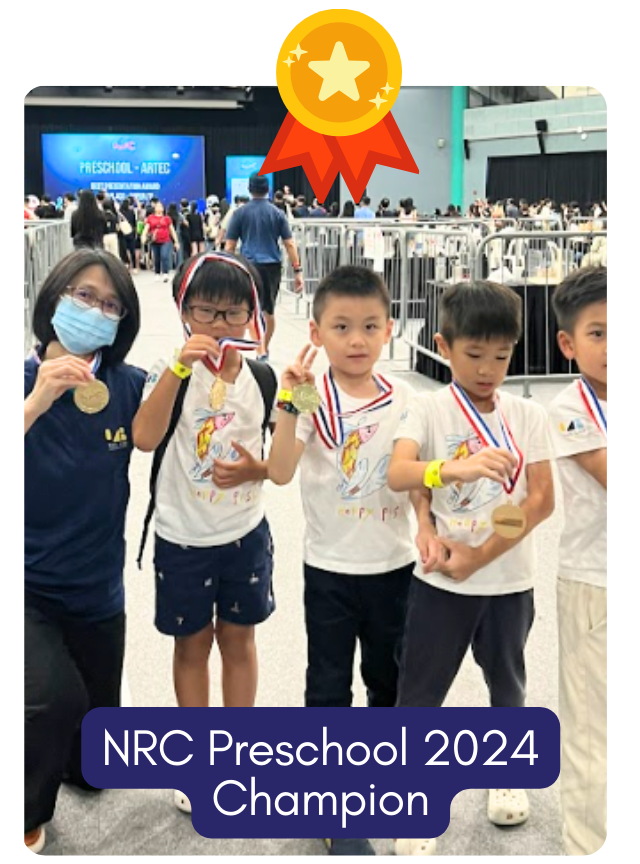
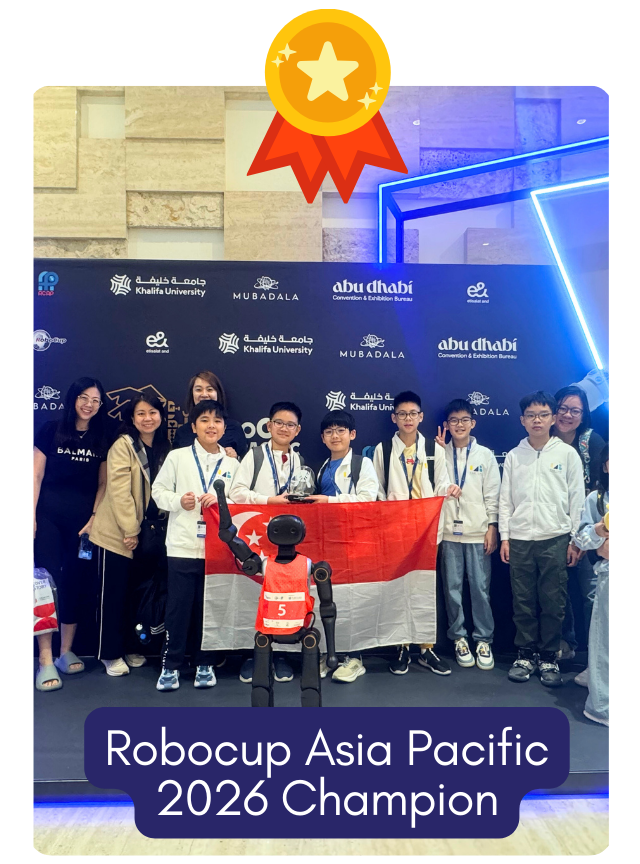
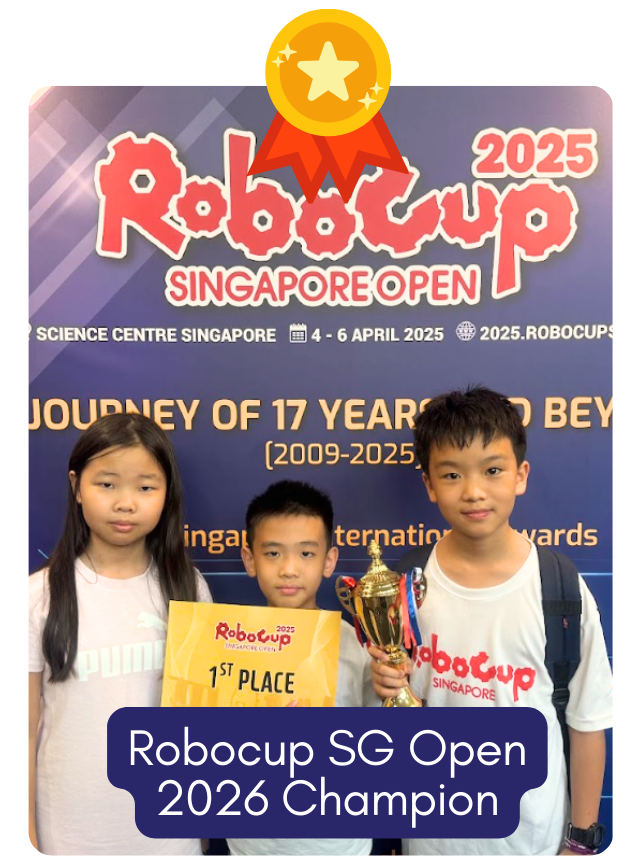
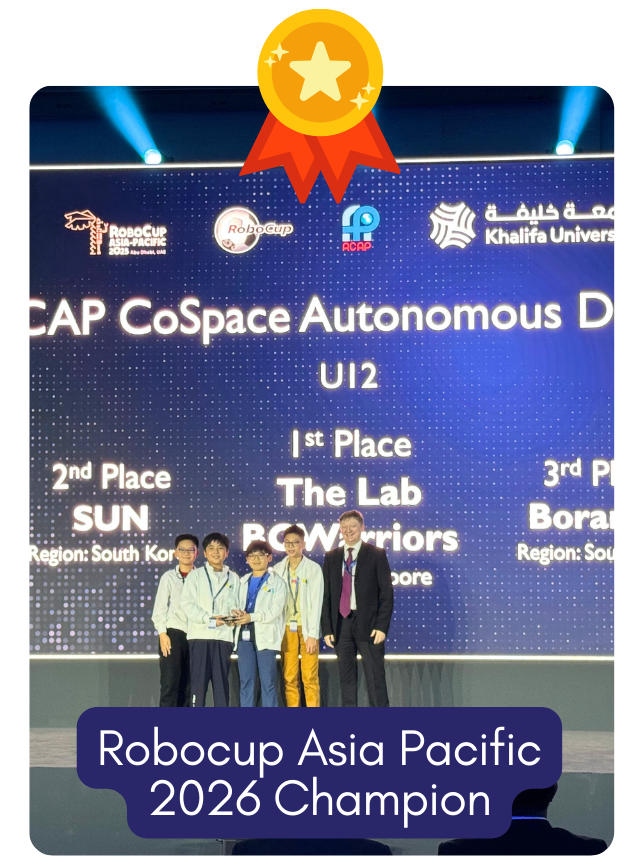
The Lab students consistently achieve national and international recognition in coding, robotics, and AI competitions. Highlights include:
- RoboCup Singapore Open 2025 Champions – beating teams from Korea, China, Japan, and more.
- RoboCup Asia Pacific 2025 Champions – representing Singapore in the UAE.
- NRC CoSpaces Ultimate Champion 2025 – winning both Primary and Secondary categories, showing national-level dominance in robotics.
- Coding Olympics Top 20, multiple years – demonstrating consistent excellence in national coding competitions.
These achievements reflect our students’ creativity, problem-solving, teamwork, and technical skills, guided by MOE-certified and IMDA-approved teachers who undergo rigorous training.
Classes for Ages 7-9
Why is it important for children to start learning Coding and Robotics as young as 7 years old?
Starting Coding and Robotics from age 7 helps children build strong problem-solving, logical thinking, and creativity during their most formative years. It boosts confidence, supports school learning, and gives them a valuable head start in future opportunities.
What does The Lab 7-9 years old program covers?
The Lab Junior (Ages 7–9) programme introduces children to Coding , Robotics and AI through hands-on projects using LEGO robotics. Students build foundational skills in computational thinking, problem-solving, and creativity, while following the MOE maths syllabus. They also develop confidence through project creation and presentations, all in a small, personalised learning environment.
What kind of projects can my child create at The Lab Ages 7–9 program?
In The Lab’s 7–9 years old programme, children create fun, hands-on projects that bring Coding and Robotics to life. They might build LEGO robots that move, sense obstacles, or follow paths, design simple games using block-based coding, and program interactive projects that combine coding with math and science concepts. Every term, students present their projects, which can also be used for DSA portfolio purposes, helping develop creativity, problem-solving, logical thinking, and confidence.
Classes for Ages 10-14
Why don't you teach Python first?
At The Lab, we don’t start with Python because young learners benefit more from mastering core programming concepts before tackling syntax. Block-based programming allows children to focus on understanding logical thinking, problem-solving, sequencing, and computational skills without being slowed down by typing errors or complex code structures. It’s faster, more engaging, and encourages experimentation—because the goal is to learn skills, not typing. Once children are comfortable with programming logic and concepts, transitioning to text-based languages like Python becomes much smoother and more meaningful.
Why do you teach Python?
How can your Python courses help with O-Level Computing and university studies?
With the news that SEC G3 Computing is now offered to all upper secondary students from 2026, we’ve been getting an increased level of interest in what SEC G3 computing is about, and how teens can be prepared for it. That’s where our S100 Python courses can help.
Secondary 1 and 2 students interested to understand what SEC G3 Computing would entail would greatly benefit from our Coder Advanced courses. These courses have content that are also covered in the SEC G3 paper, and most importantly, will offer valuable insight and potentially a strong headstart for your teen should they complete one or both modules before deciding to apply for SEC G3 computing.
View Our Gallery